Physical Address
304 North Cardinal St.
Dorchester Center, MA 02124
Physical Address
304 North Cardinal St.
Dorchester Center, MA 02124
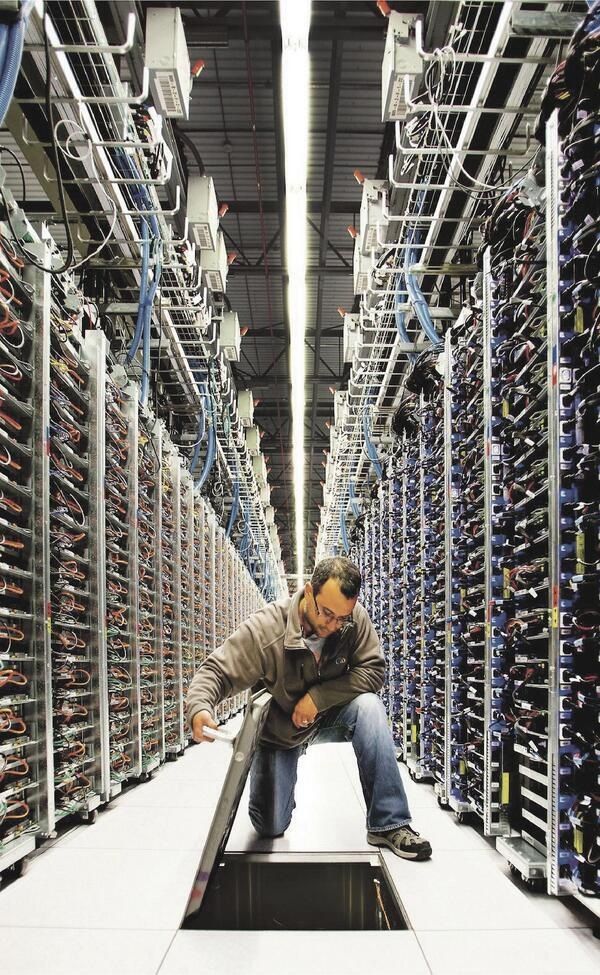
When most people think about data centers, they picture rows of servers blinking away in massive buildings. While that’s not wrong, what many people don’t realize is that not all servers are built the same.
I’ve seen firsthand how the hardware inside these facilities has evolved. A few years ago, CPUs handled most of the work. Today, AI has changed everything.
Now, data centers are filled with different types of processing units, each designed for a specific job. Some are built for general computing, others are optimized for artificial intelligence, and a few are so specialized that they only perform one type of task.
If you’re new to the industry, understanding these processors is one of the best ways to understand where data centers are headed.
Let’s break them down.
The Central Processing Unit (CPU) is the brain of a server.
No matter how advanced AI becomes, every data center still depends on CPUs to keep systems running.
CPUs handle operating systems, virtualization, databases, web hosting, and countless background processes. They are designed to perform a wide variety of tasks efficiently rather than focusing on a single workload.
Think of a CPU as a project manager.
It coordinates tasks, manages resources, and makes sure everything runs smoothly.
Even in today’s AI-focused data centers, CPUs remain critical. Bloomberg recently reported that as AI workloads shift toward inference and agent-based systems, CPUs are becoming increasingly important because they coordinate data movement and system operations around AI accelerators.
Companies like Intel, AMD, and Arm continue to develop increasingly powerful server CPUs to support modern cloud environments.
Without CPUs, nothing else in the data center works.
If CPUs are the project managers, GPUs are the heavy equipment.
Graphics Processing Units (GPUs) were originally designed to render graphics for video games. However, engineers discovered that GPUs were incredibly good at performing thousands of calculations simultaneously.
That ability made them perfect for artificial intelligence.
Today, GPUs train large language models, generate images, power chatbots, and run many of the AI applications we use every day.
According to Bloomberg Intelligence, generative AI tasks can require up to ten times more energy than a traditional internet search, largely because they rely on powerful GPU clusters. Bloomberg also notes that modern AI GPUs can consume significantly more power than traditional CPUs.
This explains why companies are spending billions on AI infrastructure.
NVIDIA has become the dominant player in this space, with its Hopper, Blackwell, and upcoming Rubin platforms powering many of the world’s largest AI deployments. Bloomberg reports that NVIDIA continues to hold a leading position in the AI accelerator market as demand for AI computing keeps growing.
In many of the newest AI data centers, GPUs are now the most valuable hardware in the building.
Not every company wants to rely entirely on NVIDIA.
That’s where Tensor Processing Units (TPUs) come in.
Google developed TPUs specifically for machine learning and AI workloads. Unlike GPUs, which are flexible enough to handle many different types of computing, TPUs are highly specialized.
They are built specifically to process AI models as efficiently as possible.
Google’s latest TPU generation, known as Trillium, delivers nearly five times the performance of its predecessor while improving energy efficiency. Reuters reported that Google’s TPU development is part of the company’s effort to reduce dependence on third-party AI hardware.
Today, Google uses TPUs extensively throughout its own infrastructure and offers them to customers through Google Cloud.
As AI competition intensifies, TPUs are becoming one of the strongest alternatives to NVIDIA GPUs.
One processor that doesn’t get much attention is the Data Processing Unit (DPU).
Yet DPUs are becoming increasingly important in large-scale cloud environments.
A DPU is designed to handle networking, security, storage management, and infrastructure services that would otherwise consume valuable CPU resources.
Think of a DPU as a traffic controller.
Instead of forcing CPUs to manage every network request and storage operation, DPUs offload those tasks and free up processing power for applications.
NVIDIA’s BlueField DPU is one of the best-known examples. Many modern AI server platforms now combine CPUs, GPUs, and DPUs into a single integrated system.
As data centers continue growing, DPUs will likely become standard equipment in many deployments.
Field-Programmable Gate Arrays, or FPGAs, occupy an interesting middle ground.
Unlike CPUs and GPUs, FPGAs can be reconfigured after manufacturing.
This means companies can customize them for specific workloads without designing an entirely new chip.
FPGAs are often used for:
One advantage of FPGAs is their ability to deliver low latency while consuming less power than some traditional processors.
They are not as common as CPUs or GPUs, but they remain valuable for highly specialized applications.
Application-Specific Integrated Circuits (ASICs) are processors designed to perform a single task extremely well.
TPUs are actually a type of ASIC.
Unlike CPUs, which are general-purpose, ASICs sacrifice flexibility for efficiency.
Many hyperscale cloud providers are now developing their own custom AI ASICs to reduce costs and improve performance.
Bloomberg and industry analysts have noted growing interest in custom AI silicon as companies seek alternatives to expensive GPU deployments.
As AI workloads become more predictable, I expect we’ll see more custom chips appearing in data centers.
One of the biggest misconceptions about AI is that GPUs are replacing CPUs.
That’s not what I’m seeing in the field.
Instead, modern data centers are becoming more diverse.
Each processor has a role:
The future isn’t about one processor winning.
It’s about multiple processors working together.
In fact, Bloomberg recently highlighted how CPUs and AI accelerators are becoming increasingly interconnected as AI systems grow more complex. The result is a balanced architecture where every processor contributes something different.
After working in data centers for several years, I’ve learned that every new technology wave creates demand for new hardware.
Cloud computing increased demand for CPUs.
Virtualization changed server design.
Now AI is driving unprecedented demand for GPUs, TPUs, DPUs, and custom accelerators.
The data center of the future won’t be powered by a single type of processor.
It will be powered by an entire ecosystem of specialized chips working together.
And from what I’m seeing on the data center floor, we’re only at the beginning of that transformation.