Physical Address
304 North Cardinal St.
Dorchester Center, MA 02124
Physical Address
304 North Cardinal St.
Dorchester Center, MA 02124

By Zyntrix Core | Data Center Engineer & Industry Observer
If you’ve been paying attention to technology over the past few years, you’ve probably noticed that AI is everywhere.
Students use it to help with research. Businesses use it to improve productivity. Developers use it to write code. What many people don’t realize is that every AI prompt, image generation, and chatbot response requires an enormous amount of computing power behind the scenes.
As a data center engineer, I’ve watched this transformation happen in real time. The demand for AI has completely changed the way we build and operate data centers. The biggest challenge isn’t necessarily power anymore, it’s heat.
That’s where liquid cooling comes in.
Today, liquid cooling is one of the hottest topics in the data center industry, and for good reason. As AI workloads continue to grow, traditional cooling methods are reaching their limits. Many industry experts now believe liquid cooling will become a standard feature in the next generation of AI data centers. Bloomberg Intelligence and infrastructure providers have highlighted cooling as one of the most critical challenges facing AI infrastructure growth.
So, what exactly is liquid cooling, and why is everyone talking about it?
Liquid cooling is a method of removing heat from servers and computer components using liquid instead of air.
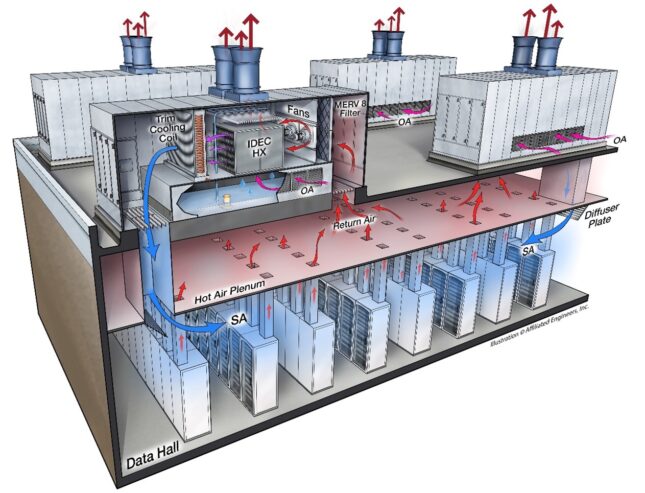
Traditional data centers rely on fans and air conditioning systems to move heat away from servers. Liquid cooling takes a different approach. Instead of cooling the entire room, it removes heat directly from the components generating it, such as CPUs and GPUs.
Think about your car engine. It uses coolant flowing through the engine block to remove heat and keep everything running efficiently. Liquid cooling works in a very similar way.
The goal is simple:
Remove heat faster, use less energy, and support more powerful computing equipment.
AI hardware generates an incredible amount of heat.
Modern AI servers are packed with high performance GPUs that consume hundreds of watts each. A single AI rack can draw 60 to 100 kilowatts of power, with some deployments pushing even higher. Traditional air cooling struggles to keep up with these densities.
I’ve seen this shift firsthand. Just a few years ago, most racks operated comfortably within the limits of traditional cooling systems. Today, AI clusters are pushing thermal limits that would have seemed impossible not long ago.
The AI boom is also creating massive demand for data center infrastructure. Bloomberg Intelligence projects continued growth in data center equipment spending as companies race to build the infrastructure needed to support AI.
As compute grows, heat grows with it.
There are several different types of liquid cooling, but they all follow the same basic principle:
This process is significantly more efficient than trying to move heat through air alone.
Water and specialized cooling fluids can carry much more heat than air, allowing operators to cool high-density equipment without using massive amounts of airflow.
This is currently one of the most popular approaches.
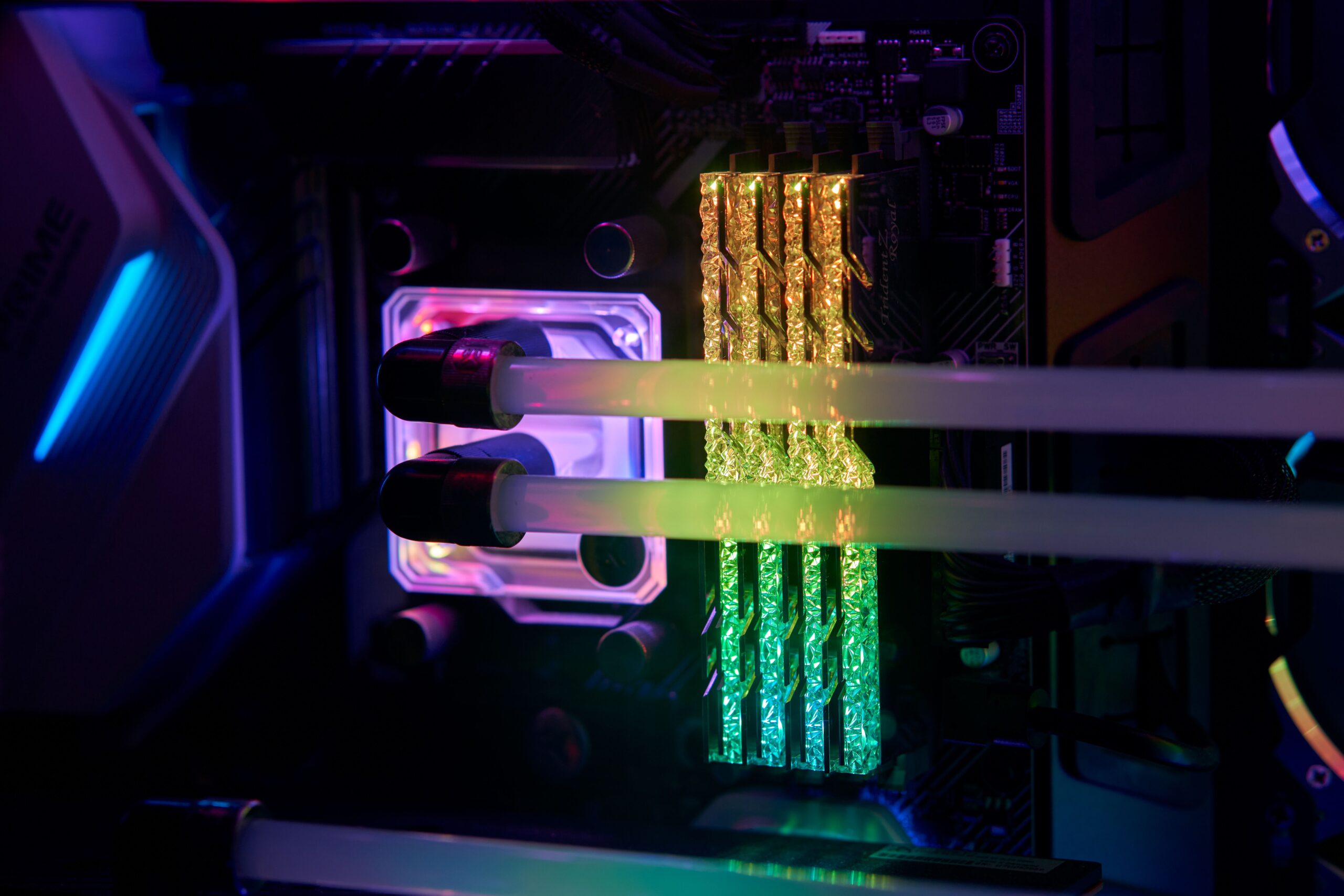
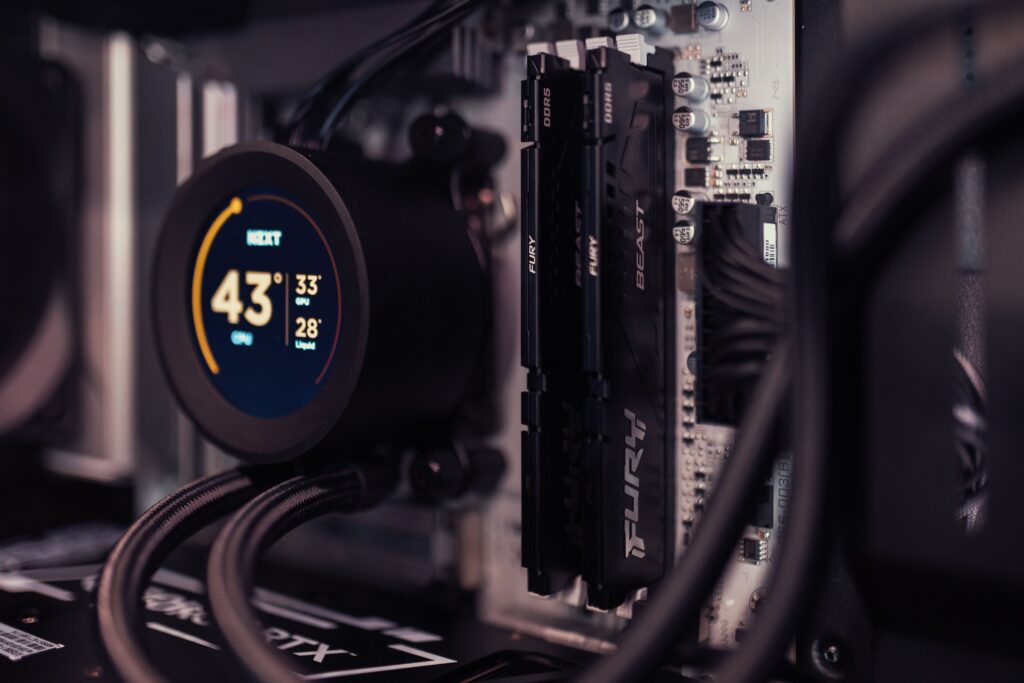
Cold plates are attached directly to CPUs and GPUs. Coolant flows through the plates and removes heat from the chips before temperatures can rise too high.
Many enterprise and hyperscale operators are adopting this method because it integrates well with traditional server designs.
This is probably the most futuristic looking form of cooling.
Instead of blowing air across servers, the servers are submerged in a special dielectric fluid that doesn’t conduct electricity.
The fluid absorbs heat directly from the hardware, creating an incredibly efficient cooling environment.
Bloomberg recently reported on the growing adoption of immersion cooling as operators look for ways to reduce energy consumption and support increasingly powerful AI workloads. The technology has moved from a niche concept to a serious solution being explored by major technology companies.
This method combines air and liquid cooling.
A heat exchanger mounted on the rear of the rack removes heat before it enters the data hall, making it an attractive option for upgrading existing facilities.
The biggest advantage is simple: liquid removes heat far more efficiently than air.
This allows operators to support higher rack densities without risking thermal issues.
Cooling can account for a significant portion of a data center’s energy usage. Bloomberg has noted that cooling remains one of the largest opportunities for improving efficiency as AI infrastructure expands.
By reducing reliance on large air conditioning systems and high-speed fans, liquid cooling can significantly lower energy costs.
When components stay cooler, they perform better.
Some studies have shown liquid-cooled AI systems maintaining lower temperatures and achieving higher performance than comparable air-cooled systems.
AI isn’t slowing down.
Every new generation of chips demands more power and generates more heat. Facilities investing in liquid cooling today are positioning themselves for the next decade of growth.
Liquid cooling isn’t perfect.
There are still challenges that operators must address:
As someone who works in the industry, I can tell you that implementing liquid cooling requires careful planning and investment.
However, many operators believe the long term benefits outweigh the challenges.
One concern that often comes up when discussing liquid cooling is water consumption.
Bloomberg has reported that many new AI data centers are being built in areas already facing water stress, raising questions about sustainability and resource management.
The good news is that many modern liquid cooling systems use closed-loop designs that recycle coolant rather than constantly consuming fresh water. As the technology matures, efficiency improvements will continue to reduce environmental impact.
From where I stand, liquid cooling is no longer an experimental technology.
It’s becoming a necessity.
The AI revolution is creating compute demands unlike anything we’ve seen before. Traditional air cooling still has a role to play, but for high-density AI environments, liquid cooling is increasingly becoming the preferred solution.
The companies building the next generation of AI infrastructure are investing heavily in advanced cooling technologies because they know one simple truth:
You can’t have AI without compute.
And you can’t have compute without cooling.
When people think about AI, they usually think about chatbots, image generators, or autonomous systems.
What they don’t see are the massive facilities working around the clock to make those technologies possible.
Liquid cooling may not be the most exciting part of the AI revolution, but it might be one of the most important.
As a data center engineer, I’ve watched the industry evolve rapidly over the past few years. If there’s one thing I’m confident about, it’s this:
The future of AI will be built on liquid cooled infrastructure.