Physical Address
304 North Cardinal St.
Dorchester Center, MA 02124
Physical Address
304 North Cardinal St.
Dorchester Center, MA 02124

Artificial intelligence is transforming the world at an unprecedented pace. From large language models and autonomous systems to predictive analytics and real-time decision-making, AI is rapidly becoming the foundation of modern business operations. While much of the public conversation focuses on the software behind these innovations, the real engine driving AI forward is computational infrastructure.
Behind every AI model lies a vast network of servers, accelerators, and data centers working around the clock to process enormous volumes of data. As AI adoption continues to accelerate, the demand for compute power is growing exponentially. This surge in computational demand is creating a challenge that many organizations are only beginning to understand: heat.
As someone who works directly with data center infrastructure, I have witnessed firsthand how AI workloads are reshaping facility design, power requirements, and cooling strategies. The traditional air-cooling systems that have supported data centers for decades are rapidly approaching their practical limits. To support the next generation of AI, the industry must embrace a new standard for thermal management.
That standard is liquid cooling.
Artificial intelligence relies heavily on accelerated computing. Unlike traditional enterprise applications that primarily run on CPUs, modern AI workloads depend on specialized hardware such as Graphics Processing Units (GPUs), Tensor Processing Units (TPUs), and custom AI accelerators.
These processors are designed to perform massive numbers of calculations simultaneously, making them ideal for training and running large AI models. However, this performance comes at a cost: significantly higher power consumption and heat generation.
A decade ago, a typical enterprise server rack might consume between 5 and 10 kilowatts of power. Today, AI deployments are pushing rack densities to 60, 80, and even 100 kilowatts per rack. Individual AI servers can consume 10 to 20 kilowatts or more depending on their GPU configuration.
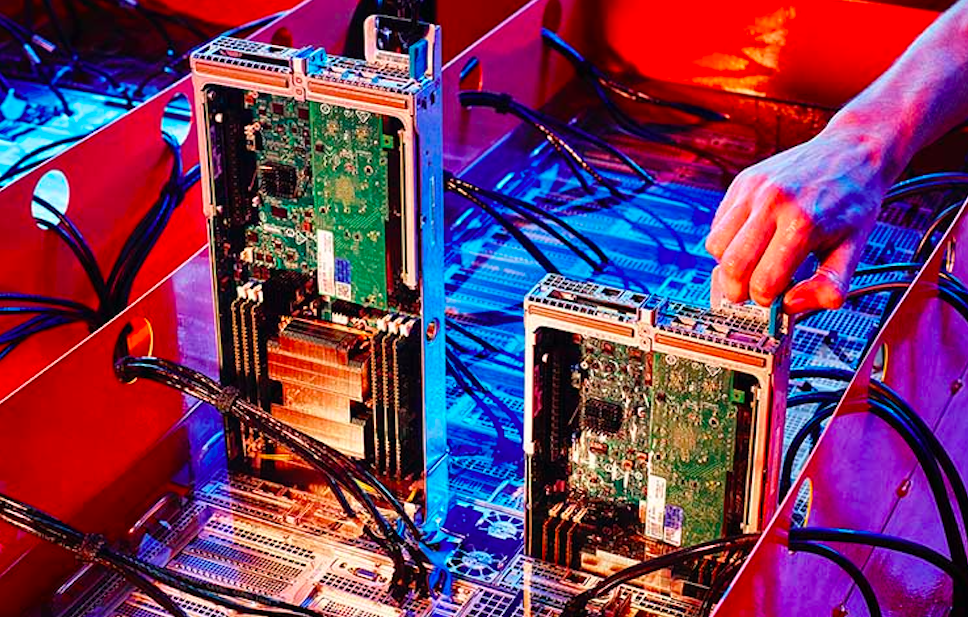
The trend shows no signs of slowing down. Modern GPUs already operate at thermal design powers (TDPs) exceeding 700 watts, and future generations are expected to push those numbers even higher. When thousands of these processors operate simultaneously within a data center, the resulting heat load becomes staggering.
The challenge is no longer simply providing sufficient power to support AI workloads. The challenge is removing the heat generated by that power quickly and efficiently enough to maintain stable operations.
At these densities, the laws of physics become impossible to ignore.
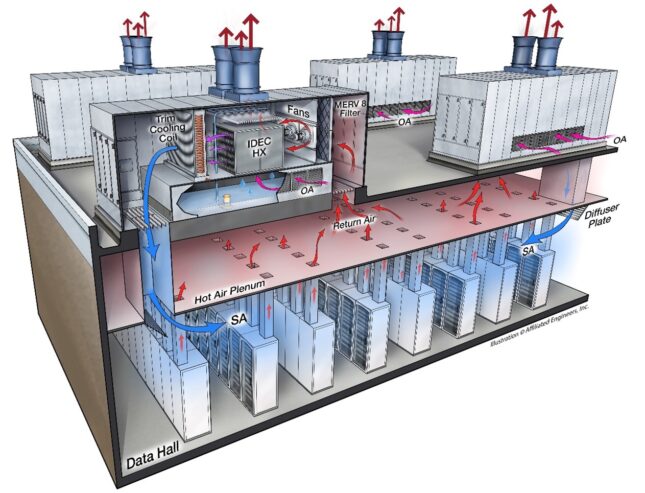
For decades, air cooling has been the standard approach for thermal management in data centers. Hot aisle and cold aisle configurations, raised floors, computer room air conditioning (CRAC) units, and high-performance fans have successfully supported generations of computing infrastructure.
However, AI is changing the equation.
Air simply cannot absorb and transport heat as efficiently as liquid. As chip power densities continue to increase, moving enough air through servers to maintain safe operating temperatures becomes increasingly difficult.
Even with high-speed fans and optimized airflow designs, hot spots can develop around processors and accelerators operating under sustained AI workloads. Once temperatures begin to climb, recovering thermal stability becomes a challenge.
Traditional cooling strategies require significant space for airflow management. Hot aisle and cold aisle containment systems, air circulation paths, and cooling equipment all consume valuable floor space.
AI clusters are designed for maximum computational density. Organizations want to deploy as much compute capacity as possible within a given footprint. Every square foot dedicated to airflow management is a square foot that cannot be used for revenue-generating infrastructure.
As rack densities increase, the amount of air required to cool the equipment becomes impractical.
Heat is one of the most significant threats to hardware reliability.
Excessive temperatures can cause thermal throttling, forcing processors to reduce performance in order to protect themselves. Over time, prolonged exposure to elevated temperatures accelerates component wear, increases failure rates, and shortens equipment lifespan.
For organizations investing millions of dollars in AI infrastructure, unexpected downtime and hardware failures can have substantial financial consequences.
Air cooling systems consume a significant amount of power. Large fans, CRAC units, chillers, and airflow management systems all contribute to facility energy consumption.
As AI workloads grow, operators often find themselves using increasing amounts of electricity simply to remove heat rather than perform useful computation.
This directly impacts Power Usage Effectiveness (PUE), one of the industry’s key metrics for measuring data center efficiency.
Liquid cooling addresses heat challenges at their source by removing thermal energy directly from the components generating it.
Rather than relying on large volumes of moving air, liquid cooling uses fluids with far greater heat transfer capabilities to absorb and transport heat away from processors.
The advantages are substantial.
Liquids transfer heat far more efficiently than air.
By bringing coolant directly to high-power components such as CPUs and GPUs, thermal energy can be removed almost immediately after it is generated. This allows systems to maintain stable operating temperatures even under intense AI workloads.
Instead of attempting to cool an entire room, liquid cooling targets the heat source directly.
One of the most important benefits of liquid cooling is its ability to support extremely dense compute environments.
Racks operating at 60 to 100 kilowatts—or even higher—are becoming increasingly common in AI deployments. These densities would be extraordinarily difficult, if not impossible, to manage using traditional air-cooling methods alone.
Liquid cooling enables organizations to maximize compute capacity while maintaining thermal stability.
This capability is particularly important for large-scale AI training clusters, high-performance computing environments, and inference workloads supporting millions of users.
Because liquid cooling removes heat more effectively, facilities can reduce their dependence on energy-intensive cooling infrastructure.
Organizations often experience:
As energy prices continue to rise and sustainability goals become increasingly important, these efficiency gains represent a major competitive advantage.
Stable temperatures lead to more stable systems.
When processors operate within their optimal thermal range, performance remains consistent and predictable. Hardware experiences less stress, reducing the likelihood of failures and extending equipment lifespan.
For mission-critical AI workloads, operational stability is just as important as raw computational power.
The growth of edge computing is creating additional cooling challenges.
Many edge facilities operate in space-constrained environments where traditional cooling infrastructure may not be practical. Liquid cooling enables organizations to deploy powerful AI systems within compact footprints while maintaining reliable operation.
This capability is becoming increasingly important for industries that require low-latency AI processing close to users or devices.
The industry is currently adopting several liquid-cooling approaches, each designed to address specific operational requirements.
Direct-to-chip cooling, often referred to as cold plate cooling, circulates coolant through plates mounted directly on processors.
Heat is transferred from the chip to the coolant and then transported away through a closed-loop system.
This approach is particularly attractive because it allows organizations to retain familiar server architectures while significantly improving thermal performance.
For many enterprise deployments, direct-to-chip cooling serves as a practical entry point into liquid cooling.
Immersion cooling takes a more radical approach.
Instead of cooling individual components, entire servers are submerged in specialized dielectric fluids that safely absorb heat without conducting electricity.
There are two primary forms of immersion cooling:
Single-phase immersion, where the fluid remains in liquid form throughout the cooling process.
Two-phase immersion, where the fluid boils as it absorbs heat and then condenses back into a liquid.
Immersion cooling offers exceptional thermal performance and can dramatically simplify airflow management. As AI infrastructure continues to scale, many experts view immersion cooling as a promising solution for future hyperscale deployments.
Rear Door Heat Exchangers (RDHx) provide a hybrid solution that combines elements of both air and liquid cooling.
These systems integrate chilled-water heat exchangers into the rear doors of server racks. As hot air exits the rack, heat is removed before it enters the surrounding environment.
RDHx solutions are particularly valuable for organizations looking to retrofit existing facilities without completely redesigning their infrastructure.
Despite its advantages, liquid cooling is not a perfect solution.
Implementing liquid cooling requires careful planning, investment, and operational readiness.
Organizations must consider:
Transitioning from air cooling to liquid cooling is a significant undertaking. However, as AI workloads continue to expand, many organizations are finding that the long-term benefits outweigh the initial challenges.
The shift toward liquid cooling is already underway across the data center industry.
Major hyperscale operators are redesigning facilities specifically to support AI infrastructure. New campuses are being built with liquid cooling integrated into their core architecture rather than treated as an optional enhancement.
Colocation providers are upgrading data halls to support higher rack densities and accommodate customers deploying AI workloads.
At the same time, a new generation of AI-focused data centers is emerging. These facilities are designed around high-density compute, advanced cooling systems, modular infrastructure, and enhanced energy efficiency.
The industry recognizes that traditional cooling methods alone cannot support the future of AI.
AI models are becoming larger, more complex, and more computationally demanding with each passing year.
As power densities continue to rise, liquid cooling will move from a specialized technology to a baseline requirement for high-performance computing environments.
Over the next decade, we can expect to see:
The future of data center design will be defined by the ability to deliver more compute power within smaller physical footprints while consuming less energy.
Liquid cooling is central to that future.
Artificial intelligence is fundamentally changing the requirements of modern data centers.
The extraordinary growth in AI workloads has created power densities and heat loads that traditional air-cooling systems were never designed to handle. As organizations race to deploy larger models and more powerful infrastructure, thermal management has become one of the industry’s most important challenges.
Liquid cooling offers a practical and scalable solution. By removing heat more efficiently, enabling higher rack densities, improving energy efficiency, and enhancing system reliability, it provides the foundation necessary for the next generation of AI infrastructure.
From my perspective as an engineer working with these systems, the direction of the industry is clear. The organizations that invest in liquid cooling today will be best positioned to support tomorrow’s AI innovations.
The future of artificial intelligence depends on more than powerful processors and advanced algorithms. It depends on our ability to keep them cool.